
Why High-Potential Students Plateau and How Personal Mentorship Unlocks Them
Think high achievers don’t struggle? Discover the reality of performance plateau and how mentorship breaks these barriers to restore intellectual growth.
In the world of education, there is a misconception that if a student is able to attain higher grades or perform well in their assignments, it will guarantee them a successful path in their career. The truth is that parents and teachers are not aware of the reality that the best-performing students in class will eventually begin to slow down their pace. However, their grades will still be at a high and impressive level, but the mental stretch that they used to learn will begin to slow down. The problem is not that it is slowing down, but it is stagnating.
The question comes in when the student is not being challenged enough because he seems to be doing well. Are all the students being challenged to the edge of their capabilities? Are all the students really being encouraged to grow intellectually? Are all the students being encouraged to ask questions, refine their thoughts, and enrich their ideas? If these questions go unanswered, the student fails to grow. Plateau can come subtly and can easily be overlooked.
The aim of this article is to explore the reality of the plateauing of high-performing students, the limitation of this plateauing, and from this, we will discover how mentorship can revitalize intellectual depth.
Why Bright Students Plateau

The Illusion of “Doing Well”
Success is usually measured in numbers, such as results from examinations, the completion of assignments, and class rankings. Although it ensures discipline and responsibility, it does not ensure the quality of the level of thinking inside the minds of the students. At the end of the day, students can easily learn how to maximize their results in class and perform their requirements as students. However, they are not challenged enough to assess their level of thinking and justify their thoughts accordingly. The hidden plateau is behind the façade of success.
Absence of Personalized Challenge
When students are faced with the right level of challenge, they can foster cognitive development without overwhelming the student. A high-calibre student can complete his or her assignment with ease, but this does not necessarily imply that the student is being challenged intellectually at the right level. Even though it may not be uncommon for a high-calibre student to have an advanced assignment from time to time, this does not necessarily imply that the student will not become intellectually stagnant.
The Comfort Zone of Competence
The student, now aware that he/she can attain success with minimal strain and effort, subconsciously avoids situations that may compromise their efficiency. Why take a risk of confusing themselves when the same routine and structure guarantee success?
The student, from the very beginning, seems like a confident and competent student. But it is most likely that the student lacks intellectual resilience. The power to carry an idea through its complexities, perfect an idea and fight off criticisms can only be built by being challenged through its complexities. Otherwise, their ideas are shallow and lack quality.
The Structural Limits of Conventional Schooling
Designed for the Average, Not the Exceptional
The current education system, no matter how good, operates within the bounds of the structural framework. The importance lies in the preservation of the curriculum and the adherence to the deadlines. The classrooms must function in a collective manner. This structure works well when there is a class of 20+ students but it is not good enough for the exceptional, and it might impose a limit on their potential. They might not be deprived of their success, but they might not be stretched to their limits.
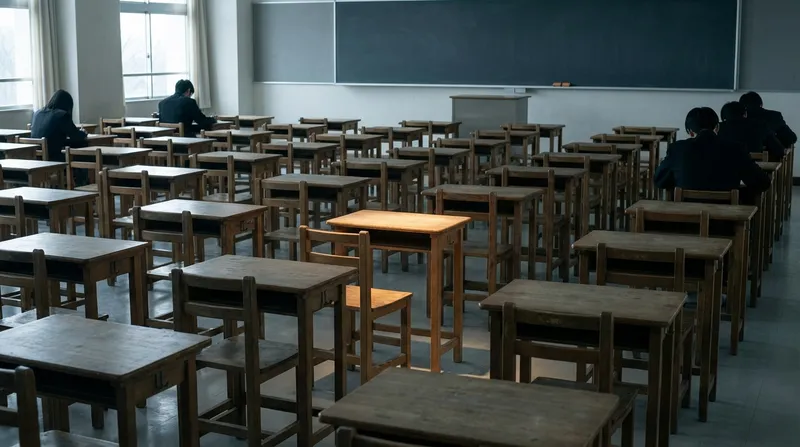
Why Even Excellent Teachers Cannot Individualize at Scale
Outstanding teachers are capable of recognising potential, but the reality of having 30 or more students in a class means that attention has to be shared. Realistic individual calibration involves dialogue and back-and-forth, detailed, individualised feedback, time, and support in order to unlock the thought processes of the student. Even outstanding teachers are unable to alter the intellectual path of their students within the context of a school system.
What High-Potential Students Actually Need
Ability to Think Beyond the Mark Scheme
High-calibre students require more than just classroom assignments. They require intellectual challenge, the freedom to explore complexity beyond the assessment framework. Thinking within the boundaries of predetermined criteria serves as a constraint that holds them back from venturing out of the box. Growth is evident when students are encouraged to do so.
Personalized Academic Roadmaps & Real-Time Feedback
Personalized academic roadmaps can help students understand where they are right now, not just cognitively but also conceptually, and where they are going to be challenged the most. So, it’s not a premium service for a few students; it’s fundamental and essential.
Feedback received after completing the work has a minimal impact. The process going on in the student’s mind while creating the work is over before he receives the feedback. Real-time feedback enriches the student’s thinking process. This is the level of engagement that can provide the student with the right level of clarity. The student can start internalizing the right level of thinking and criticism, which can actually help the student not just improve the output but also the thinking process itself.
Why Mentorship Unlocks Momentum
Constructive Challenge and Academic Maturity
Challenges are carefully crafted while considering the student’s potential. It not only helps in building resilience but also guides students in improving weak arguments and unstructured thoughts, not for discouragement but for development. Repeated exposure to this process assists students in achieving academic maturity. They stop being defensive and grade-oriented but become more analytical and thinking-oriented. Criticism is well received as a tool for development of their confidence.
The Compounding Effect of Weekly Intellectual Dialogue
Weekly discussions create a continuity in the process of intellectual development. Every week’s discussion is an addition to the previous ones, which not only enhances vocabulary, analytical skills, and argumentative skills but also has a compounding effect. The plateau effect reduces, students learn to express themselves, essay writing becomes meaningful, and discussion becomes confident.
Who Benefits Most from This Model
Learn The Discipline of Articulation
The students who will benefit most from this model are those who want to learn to articulate their reasoning and who want to be challenged more. Parents also feel that their children have more potential than what is offered by their surroundings. These students have a desire for learning that is much more than what is offered by a typical learning environment. They have questions that extend beyond what is learned in a classroom. However, there is a lack of guidance on how to ask these questions.
Through guided 1-to-1 mentorship, they will be able to articulate their thoughts because they will be forced to express and defend their ideas through verbal and written communication. By being under a mentorship, they will be able to satisfy their desire for learning because they will be able to channel their learning instead of having it stifled. They will be able to anticipate questions and answer them.
From Smart to Scholarly
To be "smart" is often a function of speed and memory. Scholarship, on the other hand, can be defined by discipline, structure, and depth. It demands commitment and a willingness to improve or refine ideas. Under 1-to-1 personalized mentorship, students are encouraged to support their arguments, improve weak reasoning skills, and work with resources on a more advanced level. Students are no longer defined by being ahead of their peers; instead, they are defined by how seriously they take ideas.
Conclusion
For many years, the secret to success in education has been the measure of quantity produced. A student can submit all assignments, get high grades, and still be intellectually unchallenged. It is not the amount of work being added or the material being accelerated. It is the quality of development being promoted, the reasoning being developed, the analysis being refined, and the judgment being encouraged. Education is not a matter of quantity; education is a matter of precision, and that is why the process of development is continuous and not linear.
From classical tutorials to contemporary research guidance, the most honored model of education has always been one of mentorship. At the most elite level, education is not about getting students through the system; it is about developing minds. That is the difference between success and excellence.