The Invasion of Poor-Quality Research Papers: How Students Can Spot Fake Research and Publish Safely
Paper mills and predatory journals are flooding academia with fake research papers. Here's how students can spot the red flags, check a journal and publish safely.
The world of academic research papers is currently facing an invasion of poor-quality research papers. Paper mills and AI-generated research papers are growing day by day, which is concerning as the rate at which they are growing is faster than the rate at which editors are able to remove them.
If you are a high school or college student hoping to publish a research paper before university admissions, to strengthen your academic portfolio, then read this guide till the end, as this matters to you.
This blog will explain what is really happening, how to spot fake research papers, and how to protect your academic reputation.
What are Paper Mills and Predatory Journals?
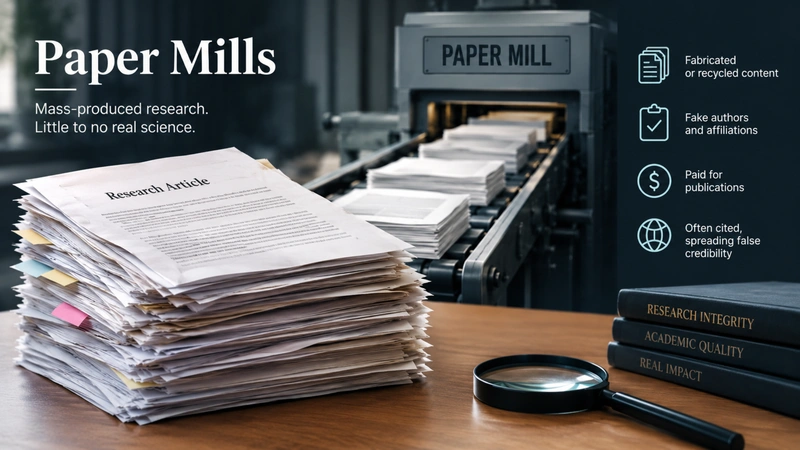
Paper Mills are for-profit companies that make research papers on demand or orders. The text is often recycled, data is often created and the images are mostly borrowed and sold to those who want to publish a research paper quickly. It’s a form of scientific fraud and research misconduct.
Likewise, predatory journals work from the other side. They take a publication fee but don’t really do a real peer review. Most of the information here can be misleading and have very little transparency.
How Big is the Problem?
The problem is actually bigger than most people think or might know. A 2025 study in PNAS found that suspected paper-mill output was doubling roughly every 1.5 years, while science as a whole doubled about every 15 years. So the fakes are growing faster than anyone can actually clean them up.
We’ve already seen what that looks like in practice. In 2023, the publisher Hindawi retracted more than 8,000 articles linked to paper mills, a record for retracted papers in a single year.
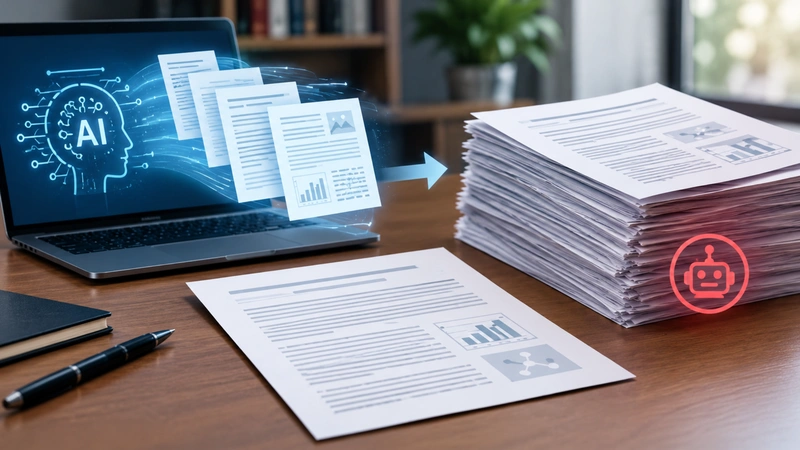
AI has a huge role to play in this. It usually produces fabricated text, phantom citations and synthetic images that look way more convincing than they did just a few years ago. This also pollutes the sources that AI search engines and chatbots take information from.
Why does this matter for students?
- Admissions: Universities scrutinise applications by looking for genuine curiosity and evidence of critical thinking from their potential students. If they find out that the student has published a paper in a fake journal, then chances are the application will be immediately rejected.
- Reputation: A retracted or predatory publication under your name can have a negative impact on your reputation and the credibility of your work for years.
- Money: Predatory journals often charge article processing charges (APCs) but do not follow any peer review process or provide indexing.
- Your own citations: If you cite an unreliable study in your literature review, your work is therefore weak and loses its credibility.
Red Flags that a Journal is Predatory
Look out for these red flags before you publish your paper in a journal. If you spot several of these, step away immediately.
- A journal guaranteeing ultra-fast publication is a major red flag, as the peer review process takes weeks or months.
- If you get spam emails inviting you to submit your paper, or flattering you about a paper you haven’t written.
- A hidden or fake editorial board on a supposedly international journal.
- If you spot made-up metrics or factors, immediately step away. Always check where the journal is actually indexed.
- Vague or missing peer review policies and procedures.
- A title that copies a respected journal, or a website full of spelling mistakes.
- Fees that only appear after acceptance.
- No clear contact details or publisher address.
Papers can themselves raise red flags too. Look out for odd, clumsy phrasing, duplicated images, unclear methodology, missing data and references that don’t exist when you search for them.
How to Check a Journal Before You Submit?
- Think. Check. Submit: The free Think. Check. Submit. checklist was built by a coalition that includes DOAJ, COPE, ISSN and OASPA, so start here.
- DOAJ: Search the Directory of Open Access Journals. If a journal claims to be listed here but isn’t, then that’s a clear warning sign.
- COPE: Check whether the publisher appears on the Committee on Publication Ethics member list. Some sites show the logo without being members, so always confirm.
- ISSN: Verify the number through the ISSN Portal.
- Indexing: Look for the journal in Google Scholar and read a few of its past articles. Do they look like real research?
- Retractions: Search Retraction Watch for both the journal and the publisher.
Keep in mind that new and niche journals aren’t automatically bad. Make sure to know their transparency, peer review process and editorial standards before you decide where to publish your paper.
How to Judge the Quality of a Paper?
Before you cite anything, ask yourself a few honest questions.
Is the research question clear? Could someone easily repeat this method? Does the data really support the conclusions? Are the references real and relevant? Has the paper been corrected or retracted? Does the journal use independent peer review?
Reading critically is exactly the kind of skill set universities are hoping to see in their applicants.
Publishing Your Research the Right Way
Always look for journals that genuinely support young student researchers, give peer review or editorial feedback, and clearly explain how submission works. Our guide to the top 10 research journals for young student researchers covers reputable STEM, psychology, humanities and multidisciplinary fields, including costs and deadlines.
Mentorship matters just as much, as students who rush through alone, with no experts guiding them, easily fall for predatory publishers. At Sapiente, our Research & Publication programme pairs ambitious student researchers with expert mentors from leading institutions like Harvard, MIT, Oxford, Cambridge, etc. Together they sharpen the research question, work through a literature review, build a clear argument and prepare a paper that’s ready for reputable global academic journals.
Quick answers
What is a paper mill in academic publishing?
A business that produces and sells fake or low-quality research papers and authorships, often built on fabricated data.
How do I know if a journal is predatory?
Look out for guaranteed fast acceptance, spam invitations, vague peer review, hidden fees and invented metrics. Then check it with Think. Check. Submit., DOAJ and COPE.
Are all open access journals predatory?
No. Most are legitimate and what counts is transparency, real peer review and sound editorial practice.
Can high school students publish genuine research?
Yes. With a strong research question, good mentorship and a reputable student journal, it's absolutely possible.
The bottom line
The flood of poor-quality research papers is real, but you don't have to get swept up in it. Question every journal, verify before you submit, and choose quality over speed. Research built carefully, with expert guidance, is what stands out.
Ready to start your own research journey? Book a free consultation or apply now to work with a Sapiente mentor.