
How to Start a Career in Robotics: Career Advice from a Robotics Researcher and Sapiente Mentor
Thinking about a career in Robotics? Prof. Riccardo Polvara shares practical insights on how students can start in robotics research and on the skills that matter most.
Introduction
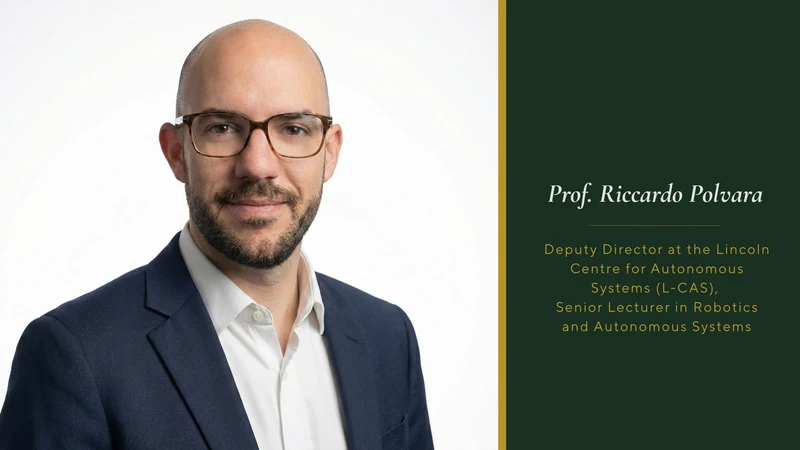
Robotics is hands-down becoming one of the fastest-growing scientific fields, and many students today are struggling to know how to get into this particular discipline. How can a student not be confused when robotics as a subject field has a background in computer science, mechanical engineering, psychology, design, and many more, all at once?
Not to worry, as Sapiente has got you covered. We put this question, along with many other important ones, to Prof. Riccardo Polvara, who is a Deputy Director at the Lincoln Centre for Autonomous Systems (L-CAS), a Senior Lecturer in Robotics and Autonomous Systems, and a Sapiente mentor, whose research projects span from UAVs and service robots all the way to agricultural robotics.
Through this blog, Prof. Polvara advises on how to start in robotics, the skills that every student needs to conduct research in this field, and what other experiences matter for students aspiring to enter into robotics.
Why Robotics Research Is Having Its Moment
When we asked Prof. Polvara what excites him the most about recent developments in robotics, he points to World Models - a vision-based machine learning system that allows a robot to build an internal understanding of the environment that it's a part of, and how its actions will have an impact or change that environment.
"A robot operating in the real world needs to understand physics, uncertainty, space, motion, and the consequences of its own actions," he explains. "World models could help robots make decisions that are not simply scripted, but grounded in how the physical world actually behaves."
The idea is based on renewed momentum around JEPA-style architectures proposed by researchers like Yann LeCun, and Prof. Polvara expects it to reshape how we look at navigation, autonomous driving, agriculture, inspection, and service robots.
It is a useful reminder for students that cutting-edge robotics research is not just about building a robot that moves, but it's about building one that understands.
The Next 10-20 years in Robotics
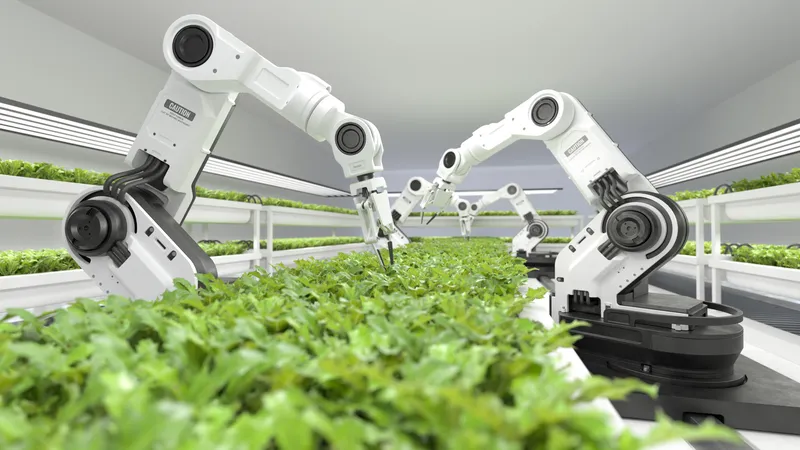
Prof. Polvara likes to joke that science fiction is already happening. Humanoid robots from companies like Unitree can now dance, jump, and perform synchronised martial arts routines that point to extraordinary engineering.
But he doesn’t think that the biggest transformation in robotics over the next 10-20 years would be about robots looking more spectacular. According to him, it will be robots that become more general, adaptable, and useful in daily human interactions and the environment. Most robots today are excellent at specialised activities like warehouse logistics, inspection, or navigation, but they are quite poor at moving flexibly between tasks without significant programming.
"The next major step is reasoning and generalisation," he says. "We need robots that can understand a task at a higher level, perceive the environment, decide what action is appropriate, and adapt when the world does not behave exactly as expected."
“This is also why competitions such as RoboCup@Home are so important. Through my involvement with LCASTOR, I see first-hand how difficult it is to build service robots that operate in domestic-like environments. At the moment, many behaviours are still somewhat hardcoded, and tasks are often evaluated in isolation. The real breakthrough will come when robots can orchestrate multiple skills dynamically, deciding on the fly what needs to be done and how best to do it,” he mentions.
According to him, the greatest impact on society will come from robots that support people in areas where there seem to be labour shortages, safety risks, or repetitive physically tiring tasks in healthcare, social care, agriculture, manufacturing and domestic assistance.
As he puts it, the future of robotics is not just about replacing human labour, but it's about expanding human capabilities so people can focus on work that requires judgment, empathy, creativity and responsibility.
How to Start a Career in Robotics?
Robotics is a vast and broad field that can feel overwhelming for a student wondering how to start a career in it. Prof. Polvara’s advice is to flip that around.
"My first piece of advice would be to start with a question or dream: how would you like robots and autonomous systems to improve people's lives?" he says. "Once you have that motivation, you can begin exploring the field in a more focused way."
Once you start here, he further directs students towards exploring free university lectures, MOOCs, open-source software, and simulators that let students experiment without having to install expensive software, along with regularly following robotics labs and research terms on social media to understand which real-world problems are being solved. According to him, curiosity about the problem matters more than mastering mathematics.
Sapiente’s Robotics Programme is designed to close this exact gap. Rather than going through tutorials alone, students will work one-to-one alongside mentors like Prof. Polvara, who will provide the exact guidance on what to learn, in what order, and how to turn curiosity into a real project, or a research paper.
A Career-Defining Robotics Project
If you stop and ask any researcher about their favourite project, you will usually end up learning more about how they think than learning about the project itself. For Prof. Polvara, that project was during his PHD, where he used deep reinforcement learning for UAV navigation, at a time when this technique was mostly known for teaching agents to play Atari games.
"We were among the early researchers trying to take those ideas into the real 3D physical world, where robots must deal with gravity, dynamics, uncertainty, and safety," he recalls. “Training runs sometimes lasted a full week, only to reveal the system hadn't learned enough, or hadn't learned at all.”
When he and his dear friend and colleague Massimiliano Patacchiola (Founder & CEO, Sapiente Education) finally deployed a trained policy on a real drone and watched it complete a sim-to-real task successfully, it confirmed that they were doing something genuinely novel. The work remains among his most cited.
The Skills Every Robotics Researcher Needs
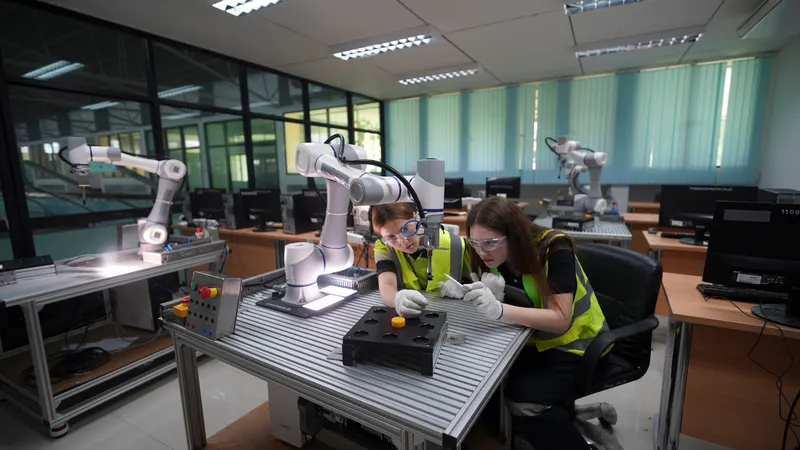
Although coding and engineering get most of the attention, they are not what Prof. Polvara thinks should be most important. "Robotics is rarely something you do in isolation," he says. "You are usually part of a multidisciplinary team, working with people who may come from computer science, engineering, design, psychology, industry, or other research areas."
According to him, communication, humility, and willingness to compromise are just as essential as technical skills. In his experience, the strongest papers and projects have come out of genuine collaboration rather than individual brilliance - a point worth remembering for any student who assumes that robotics success is purely about having coding skills.
Why Research Matters in Robotics, Even If You Never Become a Researcher
Prof. Polvara is quite direct about his opinion on research, and why he thinks research is such a valuable experience for school students, regardless of the career they eventually choose.
"Through research, young people learn how to formulate good questions, search for reliable evidence, compare different sources, and make arguments based on data rather than assumptions," he says. Robotics is an excellent example of this, because when something breaks, the cause is not obvious; it could be because of anything ranging from the algorithm, the calibration, the sensor, the environment, or the mechanical design. Research experience helps students to learn to think systematically and diagnose complex problems step by step.
He also mentioned that research builds resilience, a skill that students most definitely need. Experiments fail, hypotheses turn out to be wrong, and progress is not a straight line. Learning how to sit with that, rather than being discouraged by it, is essential.
Advice for Students Applying to Universities and for Fulfilling Careers
When we asked for one piece of advice to leave for our students, Prof. Polvara did not talk about grades or admissions strategy first. He talked about responsibility. "Artificial intelligence, robotics, and autonomous systems will increasingly influence the way we work, travel, learn, produce food, care for people, and respond to major societal challenges," he says.
He raises a specific question here: students who accept an answer from large language models without questioning how it was actually produced or whether it fits the problem.
"These tools can be extremely powerful, but they should support thinking, not replace it," he says.
His strategy on university applications would always be to read beyond the syllabus, try small projects, learn some programming, experiment with robotics kits or simulators, and follow researchers online, along with keeping good communication, resilience and teamwork as foundations. As he puts it, a robot only becomes valuable when it does something useful, safely and reliably, in a context that matters to people. "The same is true of a career," he adds. "Do not focus only on appearing impressive. Focus on becoming useful."
Start Your Own Robotics Journey
Prof. Polvara’s advice keeps returning to the idea that curiosity, tested against reality, will build real capability in robotics and in almost any ambitious career. For students who want that experience to be structured around an expert mentor rather than priced together alone, Sapiente’s Robotics programme is built around this exact one-to-one kind of guidance, from initial exploration to a completed research project.
If you’re not yet sure whether Robotics, or any other subject, is the right fit, that's precisely what our admissions consultation is for. Book a free consultation and we will help match you with the right mentor and programme according to your goals.